Drafting inside Dizire Engine
¶ Keeping scene beats and structure tools useful instead of distracting
Structure tools help only when they remove uncertainty from the next drafting move. They become a problem when you maintain them out of habit after the chapter already knows what it is doing. This article shows how to use scene beats, chapter sections, notes, and Story Analyst surfaces in Dizire Engine without turning structure into busywork.
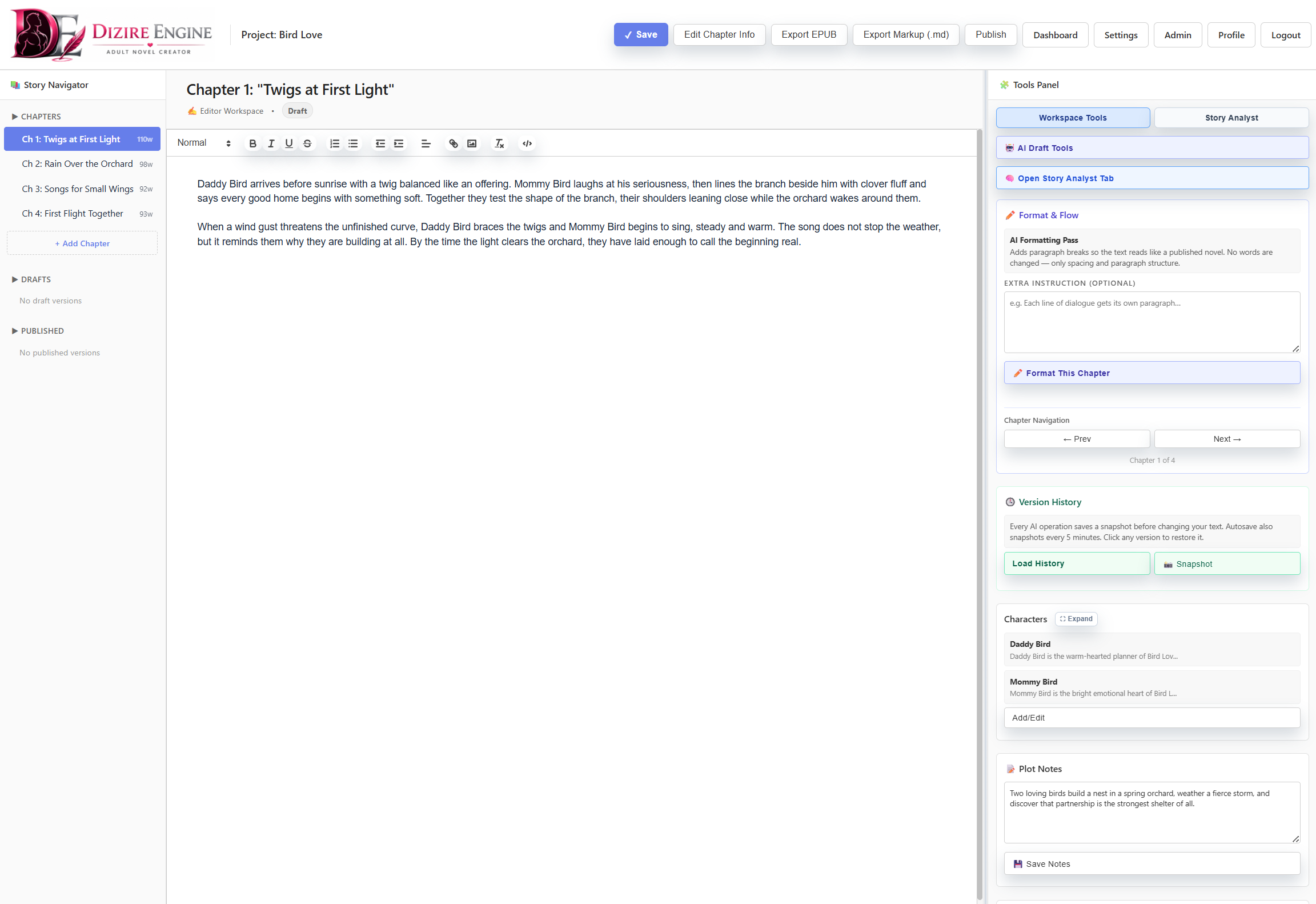
The workspace keeps structure next to the draft for a reason. Beats, sections, and notes are supposed to support the current chapter, not compete with it for attention.
On this page
- What beats and sections are actually for
- How to tell beats apart from section splits
- How to keep structure light while drafting
- When to use Story Analyst and codex checks
- When to stop planning and just write
Overview
¶ Structure tools should reduce friction, not multiply it
Dizire Engine gives you several ways to hold structure around a chapter: outline notes, scene beats, chapter notes, chapter sections, and the broader Story Analyst and codex review tools.
The mistake is trying to fully maintain every layer at once. In practice, each one solves a different problem. Use the lightest tool that keeps the next draft decision clear.
Beats vs sections
¶ Scene beats are planning; chapter sections are actual draft containers
The chapter editor supports a Scene Beats block with a beat title, beat description, and optional emotional note. Those are planning markers. They tell you what should happen.
Chapter Sections are different. They hold real draft text. Saving sections rebuilds the combined chapter draft used by exports, versions, and chapter-level AI tools, which means sections are not just notes. They are the editable pieces of the manuscript itself.
- Use scene beats when you need a short map of the moves a chapter must make.
- Use chapter sections when the draft itself is easier to manage in smaller internal chunks.
- Do not split a chapter into sections unless the draft becomes easier to control because of it.
Light structure
¶ Keep beats brief enough that they still lead to prose
A good beat list is short. It captures the turn, conflict, reveal, or emotional move that has to happen next, then gets out of the way so you can draft.
- Write beats as directional cues, not mini-scenes you will later rewrite again.
- Use the emotional note only when the emotional shift matters to how the scene should land.
- If the draft is already stable, stop refining beats and work on the prose itself.
- If the chapter is drifting, rewrite the beats first instead of forcing more prose onto a broken structure.
Analyst tools
¶ Use Story Analyst when the problem is bigger than one chapter move
Beats and sections help inside one chapter. The Story Analyst tab helps when the problem spans the manuscript: continuity gaps, unresolved threads, forgotten characters, pacing sag, recap drift, or weak foreshadowing.
That is also where the codex tools become useful. They are better for auditing the manuscript’s broader health than for deciding whether one scene needs one more paragraph.
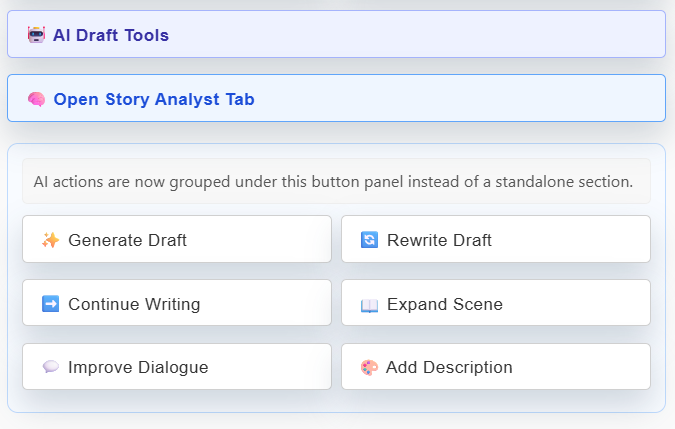
Use local structure tools for chapter control and the analyst tools for manuscript-scale diagnosis. Mixing those jobs usually creates more dashboards than progress.
Decision rule
¶ Know when to stop organizing and start drafting
The right stop point is simple: once the next draft move is obvious, structure has already done its job.
- If you know the next turn, draft it.
- If the chapter is too large to control, split it into sections.
- If the chapter keeps missing its emotional or plot target, tighten the beats.
- If the issue crosses multiple chapters, leave the local tools and run Story Analyst.
Structure should create confidence, not another backlog. The cleaner workflow is usually the one with fewer maintained layers, not more.
Next step
¶ Where to go next
Once the manuscript structure feels stable, the next useful milestone is preparing the release for publishing-facing work. Continue to Preparing a clean draft for publishing.