Drafting inside Dizire Engine
¶ Using characters, roles, and persona notes effectively
Character records are useful only when they improve the draft instead of becoming another library you maintain out of guilt. This article shows how Dizire Engine handles the character library, project and release cast linking, persona summaries, persona prompts, notes, and workspace editing so the cast stays helpful during drafting and revision.
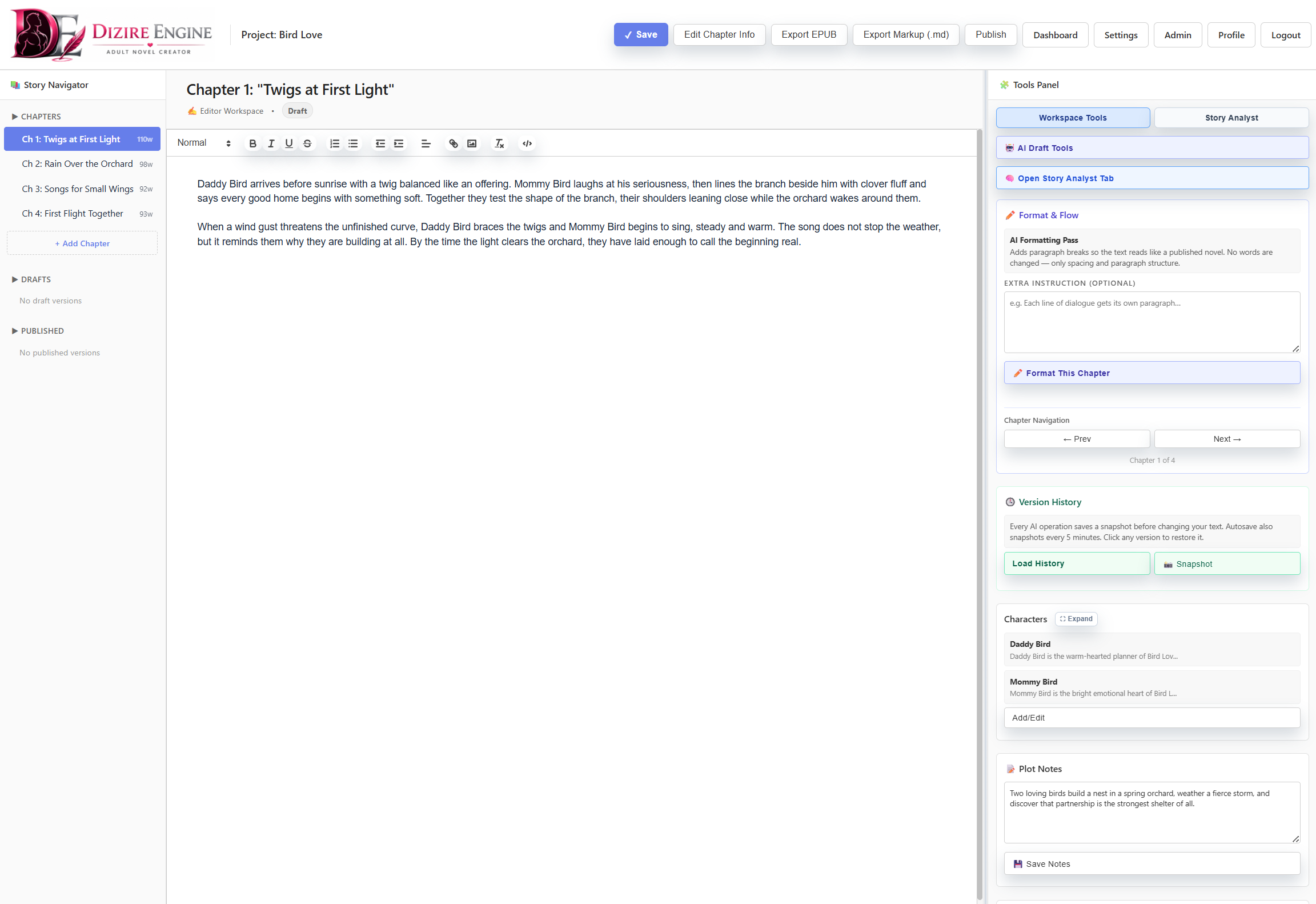
Character work belongs close to the draft. In Dizire Engine, the point of the cast tools is to keep the right people linked to the right release and easy to edit while you write.
On this page
- What the character library is for
- How project, release, and workspace cast tools differ
- How to use persona summary, prompt, and notes
- How to keep records current without overbuilding them
- How bio images and exports fit into the workflow
Overview
¶ Treat the character library as working memory, not decoration
The Characters page is a dedicated library, not just a list of names. It supports search by name, persona summary, and notes, gives you a template-import path for structured character sheets, and lets you open each character into a full profile page.
That matters because character drift is usually a memory problem. The cast changes, side characters blur together, or you forget how a recurring character speaks. The library exists to make those details visible again before they damage the manuscript.
Three levels
¶ Use project cast, release cast, and workspace cast for different jobs
Dizire Engine uses characters at three different levels, and each level solves a different problem.
- Project level: the project character library is for people who should be available across multiple releases in the same line.
- Release level: the release cast is for the people this specific book actually needs. The release settings page lets you filter library characters and link the right ones.
- Workspace level: the writing workspace lets you Add/Edit linked characters without leaving the draft, which is the right place for fast correction while writing.
This separation keeps the cast usable. If every character is linked to every release, the library stops helping and starts hiding what matters.
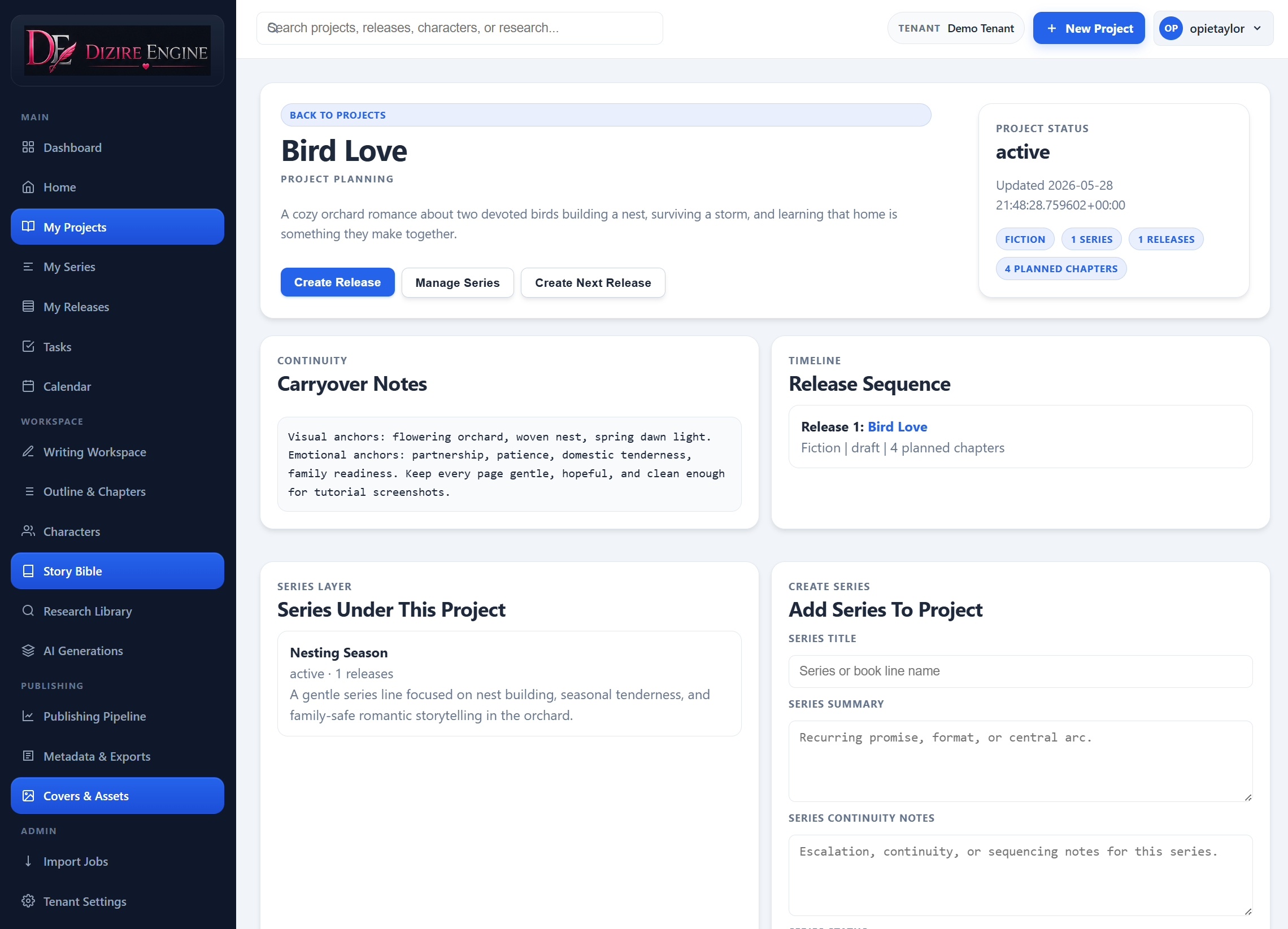
Project-level planning is where shared continuity belongs. Use that layer for the recurring cast a whole story line depends on, then narrow the release cast to the people that actually matter in one manuscript.
Persona fields
¶ Know what each character field is supposed to remember
The full character profile supports fields like role, personality, appearance, backstory, motivations, fears, speech style, persona summary, persona prompt, and general notes.
- Use role for the job the character serves in the story, not their entire identity.
- Use persona summary for the fastest human-readable reminder of who they are.
- Use persona prompt when you want generation tools to inherit a stronger voice or behavioral frame.
- Use notes for rough reminders, unresolved ideas, or scraps that are still too messy for the cleaner persona fields.
- Use speech style, motivations, and fears when the character’s voice or decisions are part of what keeps scenes coherent.
Maintenance
¶ Update records from the page that already knows the problem
Character maintenance is spread across the library, the full profile, and the workspace on purpose.
- Use the full character page when you need template import, JSON import/export, Refresh Persona, or detailed field editing.
- Use the workspace Edit Release Characters modal when a linked character needs a quick correction during drafting.
- Use the library filter and false-positive tools when the cast list itself is becoming noisy.
The system also helps you notice cast problems. The Story Analyst workflow can flag characters not linked to the current story, which is often the fastest way to discover missing cast connections.
Assets and export
¶ Use bio images when the character belongs in bonus material, not because every record needs art
Character profiles support a one-page bio image upload. That is useful when you want the release to include optional bonus character pages, because the export pipeline can turn saved bio images into a character gallery section.
Do not let art become a blocker. The most important fields are still the ones that keep the character’s voice, role, and continuity clear during drafting. Bonus material is valuable only after the core record already works.
Next step
¶ Where to go next
Once the cast is stable, the next structural tool to use carefully is the beat layer. Continue to Keeping scene beats and structure tools useful instead of distracting.